Introduction to Fashion Illustration
Develop your fashion drawing skills through practical exercises exploring figure proportions, garment illustration and fabric rendering.

SHORT COURSE | FASHION DESIGN
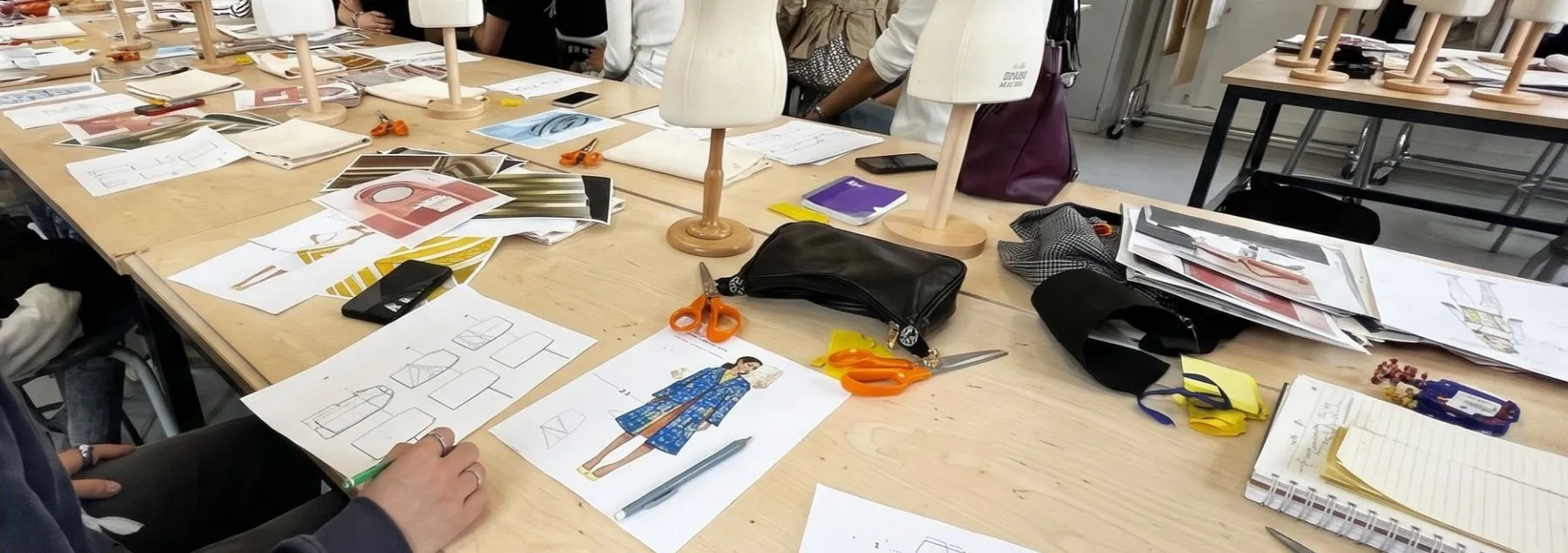
An Intensive Introduction to Fashion Design & Creative Practice
Discover what it means to study fashion design through an immersive programme combining creative research, fashion history and theory, illustration, textile exploration and introductory garment construction.
Inspired by the research-led and experimental approaches of British art-school education, this seven-week course introduces the essential creative and technical disciplines involved in fashion design.
Through lectures, practical workshops, guided experimentation and individual project development, you'll explore how designers transform initial ideas into original clothing concepts while gaining an understanding of the wider fashion industry.
Designed for motivated beginners, the programme offers an opportunity to experience different aspects of fashion education, develop your creative abilities and discover where your interests might lead.
No previous fashion design experience is required.
Fashion design begins long before the first garment is made.
Behind every collection lies a process of observation, research, experimentation and creative decision-making. Designers investigate the world around them, explore cultural and historical references, experiment with materials and develop ideas that gradually take shape as clothing.
But what does the process of studying fashion design actually involve?
Introduction to Fashion Design offers a comprehensive introduction to the creative and practical disciplines that shape contemporary fashion education.
Drawing on the research-led teaching approach associated with British art schools, the programme encourages you to look beyond trends and discover how fashion can be informed by art, history, culture, technology, personal experiences and the wider world.
You'll begin by exploring the foundations of fashion as a creative discipline, gaining an understanding of the design process, the role of research and the different specialisms that contribute to the industry.
Through introductory lectures in fashion history and theory, you'll discover how clothing reflects cultural, social and artistic developments, and how historical and contemporary influences continue to inform the work of designers.
You'll learn how to approach a creative brief, conduct visual research and develop original ideas through sketchbook exploration, observational drawing and experimentation.
As the programme progresses, you'll explore fundamental fashion drawing techniques, colour theory, fabric properties and introductory two-dimensional and three-dimensional design methods.
You'll also gain practical exposure to garment construction, discovering how fabrics, patterns and basic sewing techniques contribute to transforming a design into a physical object.
Rather than focusing exclusively on illustration or technical skills, the course introduces fashion design as an interconnected creative process in which research, experimentation, drawing, materials and construction inform one another.
You'll also explore the role of fashion communication, styling, image-making and creative direction, gaining a broader understanding of the opportunities available within the fashion industry.
Throughout the programme, you'll work on an individual fashion design project, applying the techniques and knowledge introduced during the course to develop an original outfit concept.
By the end of the seven weeks, you'll have produced a body of creative work documenting your research, experimentation and design development, while gaining a clearer understanding of the skills and disciplines involved in fashion education.
An optional eighth week offers further opportunities for individual guidance, supplementary lessons and creative project presentations.
This programme is designed for individuals who want to explore fashion design through a structured, practical and engaging educational experience.
It is particularly suitable if you:
No previous experience in fashion illustration, sewing, pattern cutting or creative software is required.
The programme is designed for complete beginners, although participants should be prepared to undertake independent creative work and engage actively in practical exercises.
This programme introduces the fundamental disciplines of fashion design through a combination of contextual learning, visual research, practical exercises and independent project development.
You'll explore the following areas:
Discover fashion as a creative, cultural and professional discipline.
Explore key developments in fashion history, influential designers, artistic movements and the relationship between clothing, society and cultural identity.
Gain an introductory understanding of contemporary fashion practice, including the different roles involved in developing, producing and communicating fashion.
You'll also explore how historical and theoretical knowledge can inform creative research and contribute to the development of original design ideas.
Learn how designers approach creative briefs and develop ideas through research and investigation.
Explore primary and secondary research methods, including visual observation, historical sources, cultural references, museum collections, photography and contemporary creative practice.
Discover how to identify meaningful references, investigate a subject and translate research findings into an initial creative direction.
Develop an understanding of the relationship between research, concept development and individual creative expression.
Explore the role of the sketchbook as a space for observation, documentation and creative experimentation.
Learn how to combine research images, drawings, written observations, colour studies and experimental material to document the development of an idea.
Experiment with collage, visual storytelling and different approaches to organising research.
Discover how a sketchbook can communicate the progression of your creative thinking rather than simply present finished ideas.
Learn the introductory principles of fashion drawing and discover how designers communicate clothing ideas visually.
Explore basic fashion figure proportions, garment silhouettes, shape and volume through guided drawing exercises.
Experiment with observational drawing, fashion templates and introductory illustration methods to communicate different design possibilities.
The emphasis is on developing confidence in visual communication rather than achieving advanced technical illustration skills.
Discover how materials influence the appearance, movement and structure of clothing.
Explore the properties of different fabrics, including their weight, texture, drape and suitability for particular garment types.
Learn introductory approaches to colour selection, colour combinations and surface design.
Through practical material studies, you'll investigate how fabrics and textures can inform creative decisions and contribute to the development of a design concept.
You'll also be introduced to responsible material choices and the role of sustainability in contemporary fashion practice.
Explore how research and initial ideas can be transformed into fashion designs through experimentation.
Investigate shape, silhouette, proportion and volume using drawing, paper manipulation, material studies and introductory three-dimensional techniques.
Learn how to generate different design possibilities, evaluate your experiments and refine ideas through a process of creative development.
Discover the importance of testing, questioning and revisiting ideas rather than relying exclusively on an initial design.
Gain practical insight into how garments are made and how construction influences the design process.
Explore the relationship between the body, fabric, pattern pieces and garment structure.
You'll be introduced to essential garment-making terminology, basic fabric handling and introductory sewing and construction methods through demonstrations and practical exercises.
Discover how seams, garment components and construction techniques contribute to shaping clothing.
This introduction is intended to develop your technical awareness and understanding of garment construction rather than teach advanced pattern cutting or complete garment production.
Explore how fashion ideas are communicated through photography, styling, art direction and visual storytelling.
Discover how designers and creative teams develop imagery to communicate the identity and intended audience of a fashion concept.
Consider how styling, composition, visual references and creative direction influence the way clothing is presented.
You'll also be introduced to the broader creative opportunities within fashion, including fashion communication, textile design, image-making and product development.
Bring together your research, drawing, material exploration and experimental work to develop an individual fashion design project.
Learn to establish a creative direction, select and refine design ideas and consider how different elements contribute to a coherent final concept.
Explore methods of presenting your work through visual research, sketchbook development, design studies and a final outfit proposal.
The project encourages you to demonstrate the progression of your ideas and the creative decisions behind your work.
By the end of this course, you will be able to:
Throughout the programme, you'll work towards developing your first individual fashion design project.
Starting with an introductory creative brief, you'll investigate a subject of personal interest and explore how it can inform an original clothing concept.
Your project will bring together:
Alongside your individual project, you'll also produce practical exercises and introductory construction samples that demonstrate your exposure to different techniques and creative disciplines.
The emphasis is on understanding and documenting the design process rather than producing a fully constructed garment.
Your completed work can provide the starting point for further fashion projects, portfolio development or continued study.
At BFFI, we believe fashion education should encourage curiosity, independent thinking and a willingness to experiment.
Our teaching approach is informed by British art-school methodologies, combining contextual research with practical creative development.
The programme introduces students to the relationship between theory, experimentation and hands-on design practice, encouraging them to explore ideas through different techniques and disciplines.
Teaching combines:
Fashion History & Theory Lectures
Introductions to important fashion movements, cultural developments, designers and contemporary issues that shape fashion as a creative discipline.
Practical Creative Workshops
Guided exercises exploring drawing, material experimentation, textile investigation and introductory design development.
Garment Construction Demonstrations
Practical introductions to basic garment-making techniques, fabric handling and construction principles.
Individual Creative Projects
Opportunities to apply newly acquired skills to a personal fashion design concept throughout the programme.
Creative Discussion & Feedback
Constructive guidance and group discussions designed to help participants evaluate ideas, explore alternative directions and develop greater creative confidence.
Independent Study
Research, sketchbook development and practical exercises completed between teaching sessions.
The core programme takes place over seven weeks, with one four-hour session each week.
This provides 28 hours of scheduled teaching, combining lectures, demonstrations and practical learning.
Students will also be expected to undertake independent creative work between sessions to develop their projects and consolidate the techniques introduced during the programme.
Class sizes are limited to a maximum of 15 participants to maintain an interactive learning environment and provide opportunities for individual guidance.
Participants who would like additional time to develop their work may choose to attend an optional eighth week.
This extension offers opportunities for:
The optional extension is designed for participants who wish to explore their work in greater depth or receive additional guidance on their future creative development.
The core curriculum and final project are designed to be completed during the initial seven weeks.
Details regarding the optional extension, including availability and any additional fees, will be confirmed before enrolment.
Participants will need access to basic drawing, research and creative materials.
Recommended personal supplies include:
BFFI will provide a selection of printed educational materials throughout the programme.
These may include:
Materials for selected practical exercises will also be made available during scheduled teaching sessions.
The programme does not require students to purchase a sewing machine or specialist fashion equipment.
A detailed materials list, including any additional personal supplies required, will be provided before the course begins.
Introduction to Fashion Design is designed for complete beginners.
No previous formal education in fashion, art or design is required.
Participants do not need prior experience in drawing, sewing, garment construction or pattern cutting.
An interest in fashion, creative curiosity and a willingness to experiment are the essential starting points.
As the programme includes practical exercises and independent project development, participants should be prepared to dedicate time to creative work outside scheduled sessions.
Please note: This is an intensive introductory short course offering exposure to multiple fashion disciplines. It is not a university degree, an accredited foundation qualification or a substitute for comprehensive technical garment-production training.
€750 per participant
The course fee includes:
Details of the optional eighth-week extension will be provided before enrolment.
The course fee may be paid in full or divided into two or three instalments.
Option 1: Full Payment
One payment of €750.
Option 2: Two Instalments
Two equal payments of €375.
Option 3: Three Instalments
Three equal payments of €250.
Payment deadline: The full course fee must be settled no later than 10 calendar days before the course start date, regardless of the payment option selected.
Payment instructions and individual instalment deadlines will be provided during enrolment.
The next intake of Introduction to Fashion Design is planned for February 2027 in Bucharest.
The seven-week programme will include one four-hour teaching session per week, with an optional eighth week for additional creative development and guidance.
The exact start date, timetable and venue will be announced ahead of enrolment.
With a maximum of 15 participants, places are limited to maintain an interactive learning environment.
Join our waiting list to receive information about confirmed dates, enrolment and availability.
Joining the waiting list is free and does not reserve a place or require payment.
Introduction to Fashion Design provides an opportunity to discover different creative disciplines within fashion and identify the areas you'd like to explore further.
Whether you're interested in developing collections, strengthening your drawing skills, learning garment construction or building a fashion portfolio, BFFI offers specialist programmes to support your next steps.